Mikrotik
The CrowdSec Mikrotik integration connects CrowdSec's hosted blocklist endpoint to your Mikrotik router.
Because Mikrotik does not have native external IP list ingestion, the integration uses a script that fetches the blocklist from CrowdSec's API and imports it into the Mikrotik firewall address list, scheduled to run automatically.
Step 1 — Create the integration in the CrowdSec Console
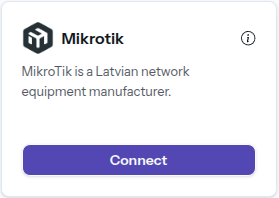
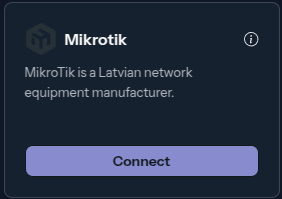
In the Integrations page, click Connect under the Mikrotik card.
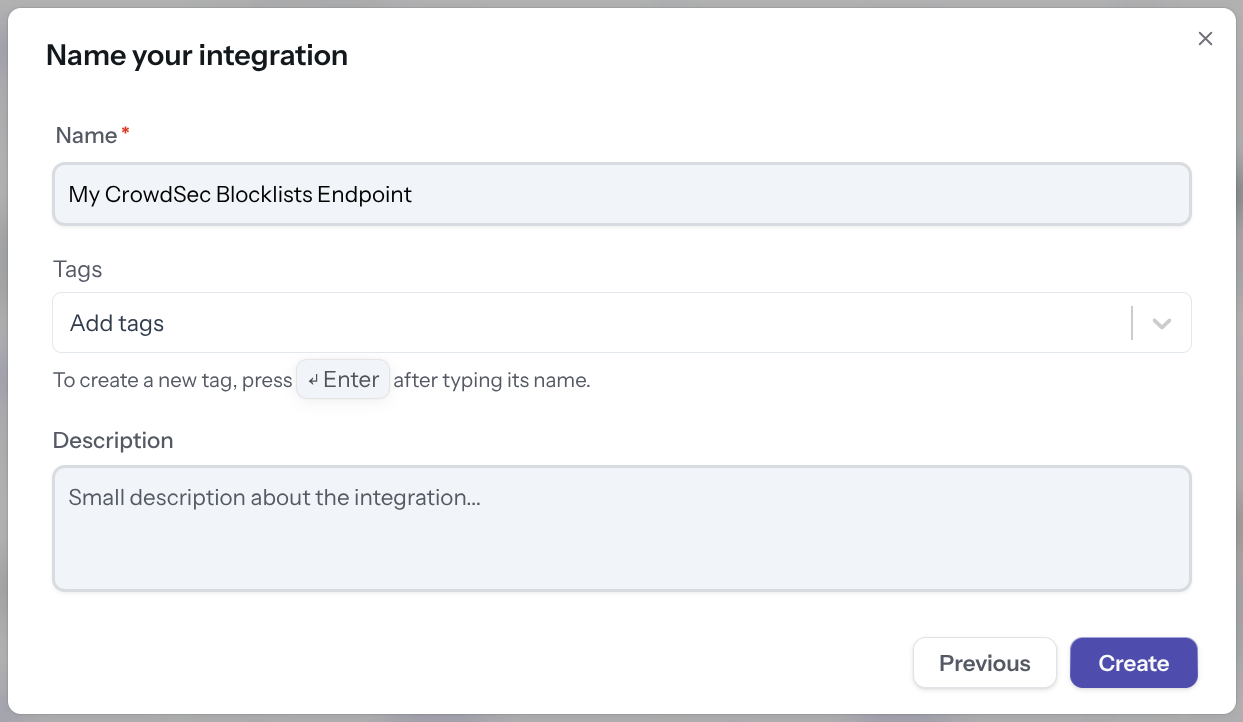
Name the integration (must be unique to your account), then click Create.
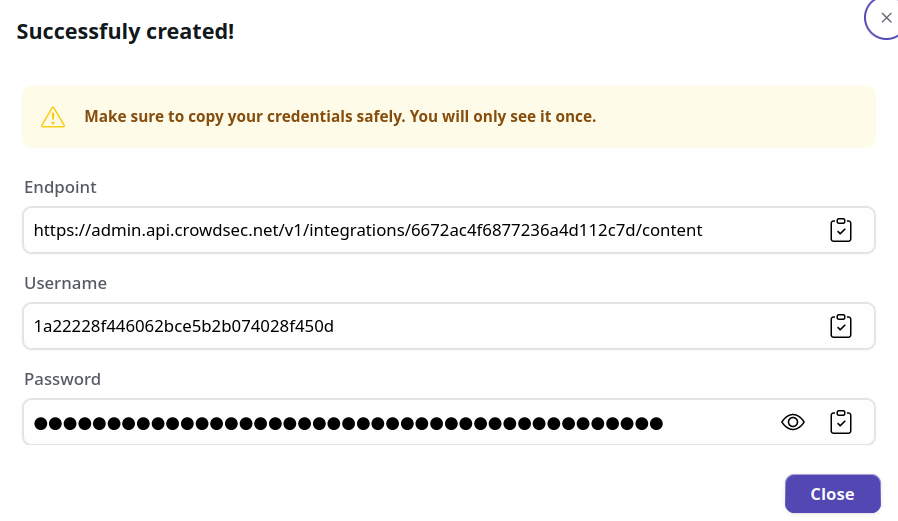
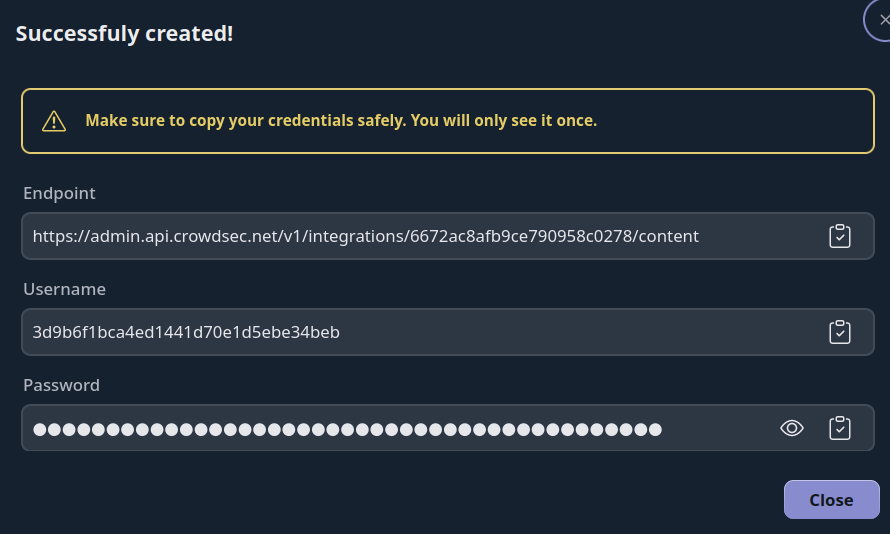
You now have an HTTPS endpoint and Basic Auth credentials to configure on your Mikrotik device.
Step 2 — Configure Mikrotik
Create the fetch script
Create a new script in your Mikrotik device:
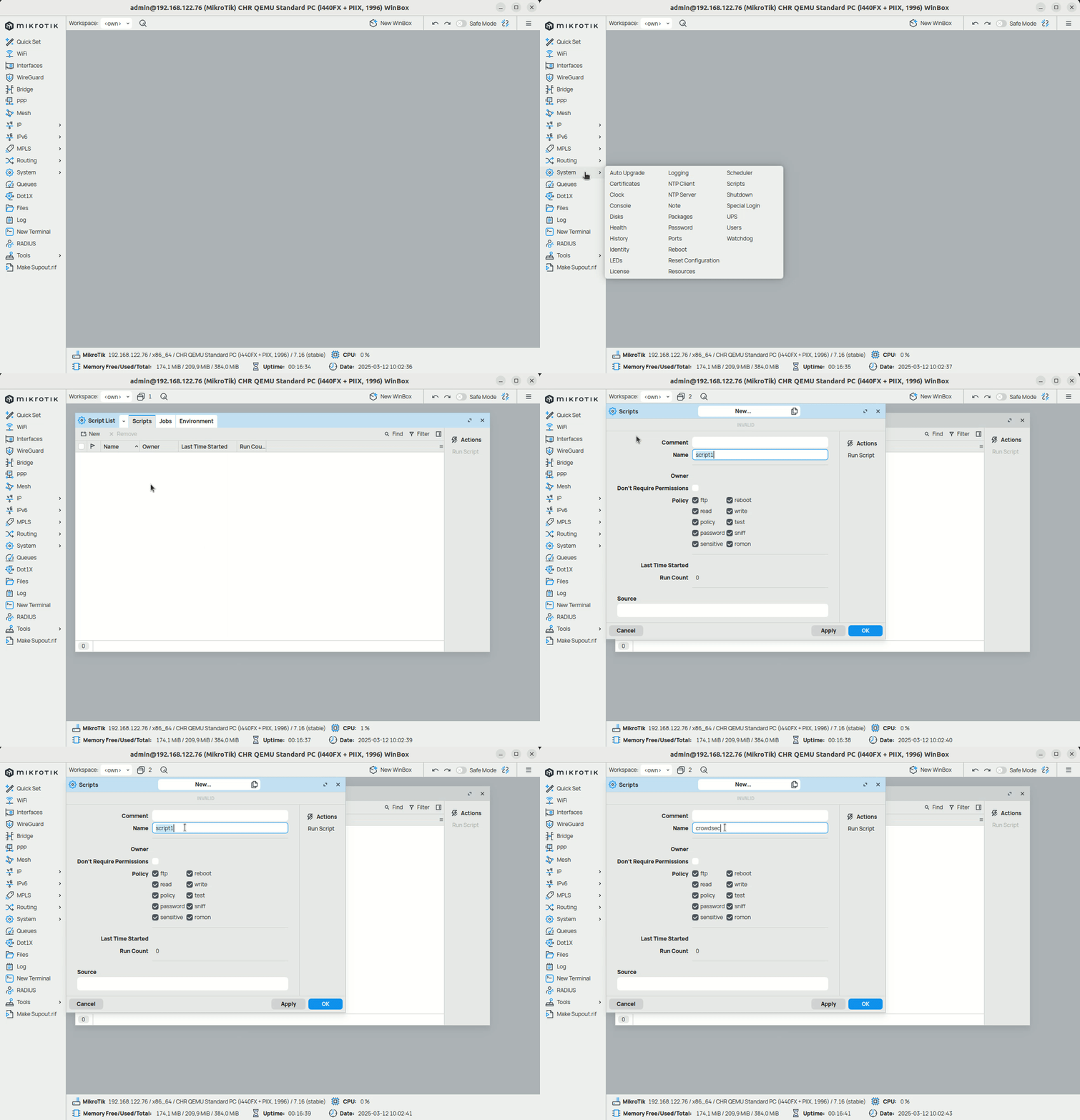
Add the following script content, replacing <integration_id>, <username>, and <password> with the values from the Console:
:local name "[crowdsec]"
:local url "https://admin.api.crowdsec.net/v1/integrations/<integration_id>/content"
:local fileName "blocklist.rsc"
:log info "$name fetch blocklist from $url"
/tool fetch url="$url" mode=https dst-path=$fileName http-auth-scheme=basic user="<username>" password="<password>" idle-timeout="30s" http-header-field="Accept-Encoding:gzip"
:if ([:len [/file find name=$fileName]] > 0) do={
    :log info "removing old ipv4 blocklist"
     /ip/firewall/address-list/remove [ find where list="crowdsec-integration" ];
    :log info "removing old ipv6 blocklist"
     /ipv6/firewall/address-list/remove [ find where list="crowdsec-integration" ];
    :log info "$name import;start"
    /import file-name=$fileName
    :log info "$name import:done"
} else={
    :log error "$name failed to fetch the blocklist"
}
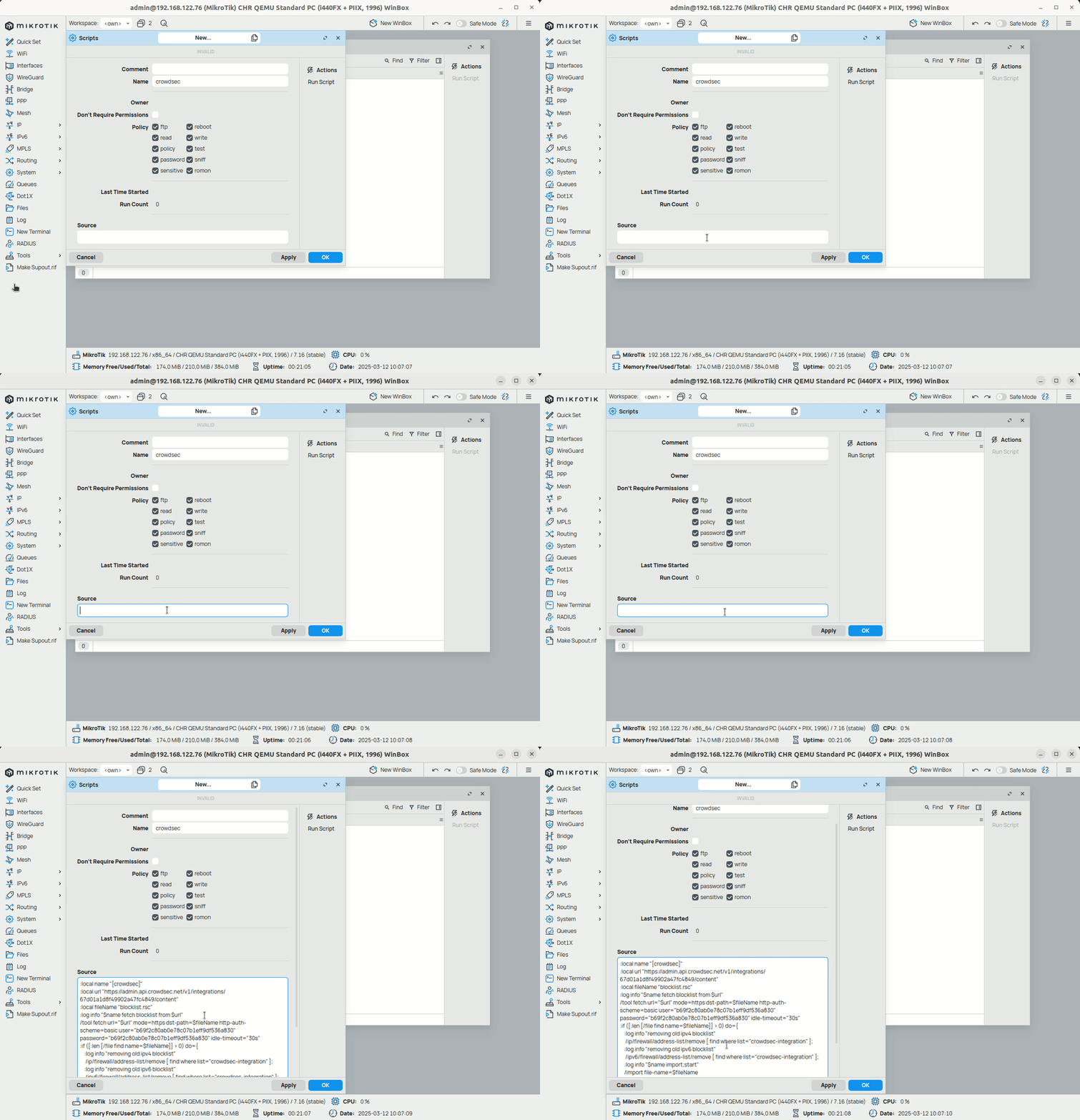
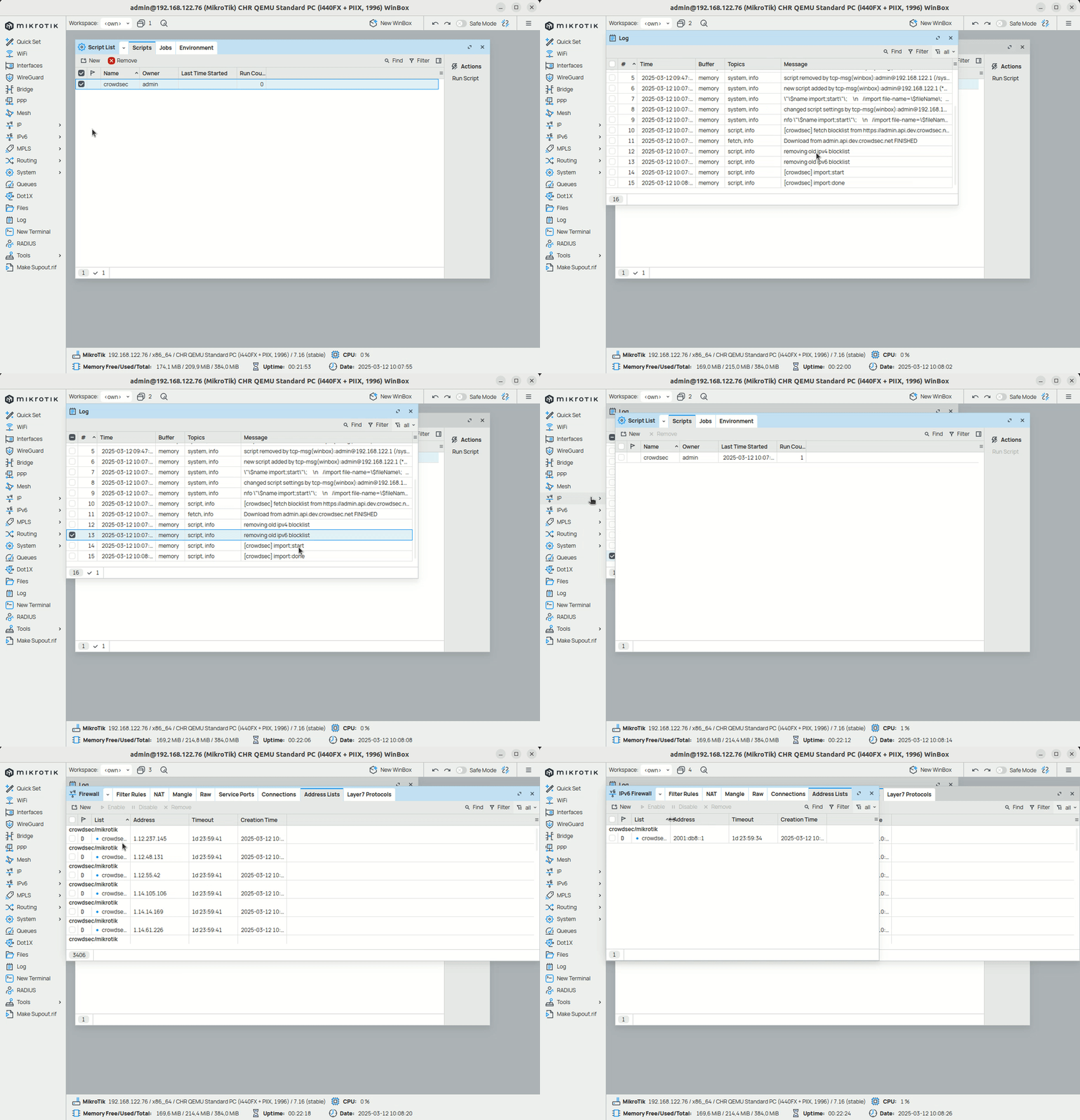
Click OK to save the script. You can run it immediately and check the logs to verify it is working.
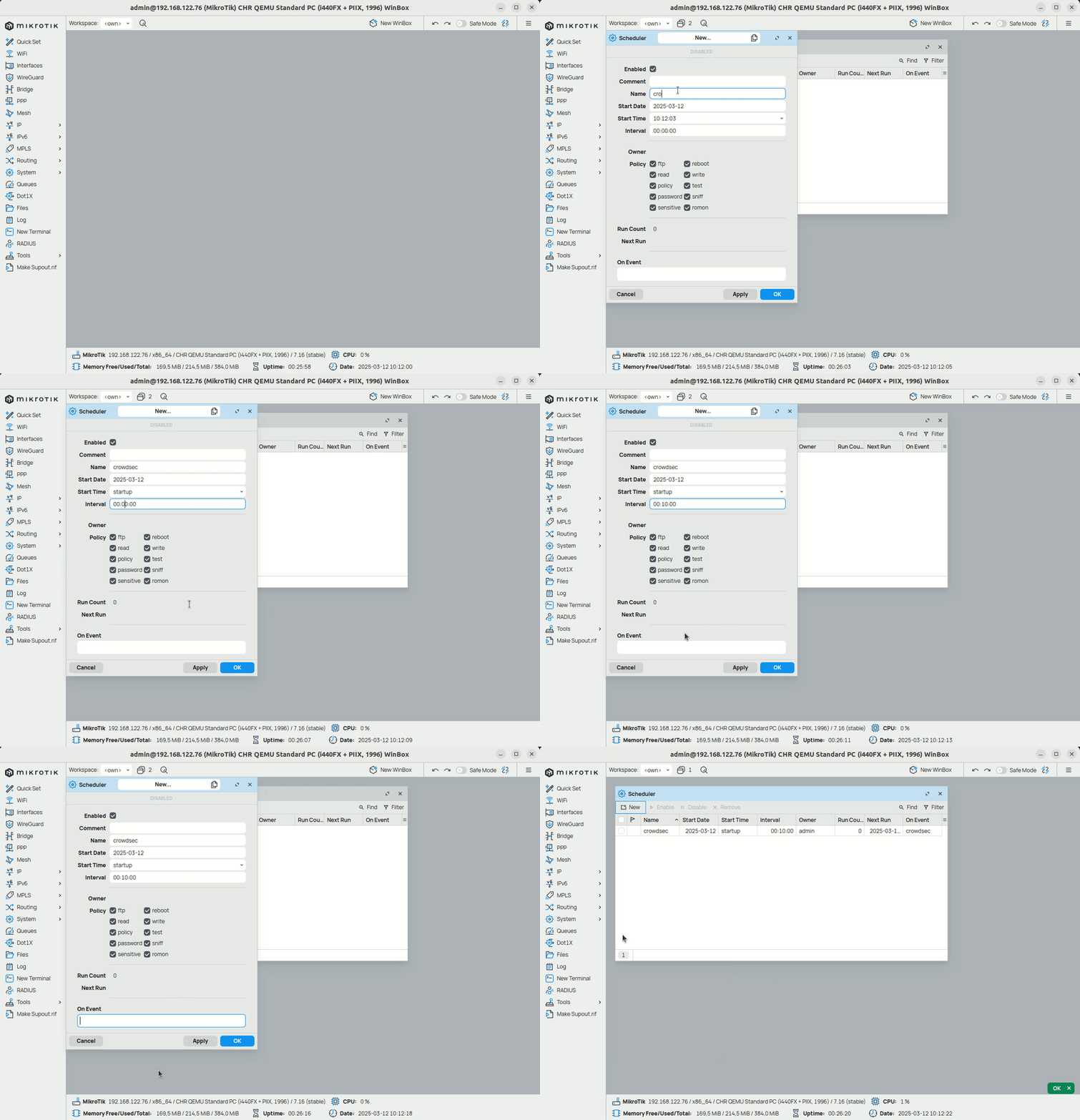
Create the scheduler
To automate the fetch, create a scheduler that runs the script every 24 hours.
Format example
The CrowdSec blocklist is served in Mikrotik format, with one entry per line:
/ip firewall address-list add list=crowdsec-integration address=1.2.3.4 comment="crowdsec/mikrotik" timeout=48h;
/ip6 firewall address-list add list=crowdsec-integration address=2001:0db8:85a3::/128 comment="crowdsec/mikrotik" timeout=48h;
Manage integration size limits with pagination
If you want to learn how to manage integration size limits with pagination, please refer to the Managing integrations size limits with pagination section.
Next Steps
Subscribe to blocklists in the Blocklist Catalog to populate your integration.